Corrosion resistance
Low–Medium
Coefficient of friction
Medium–High
Hardness
670-750 Hv
Appearance
Very bright
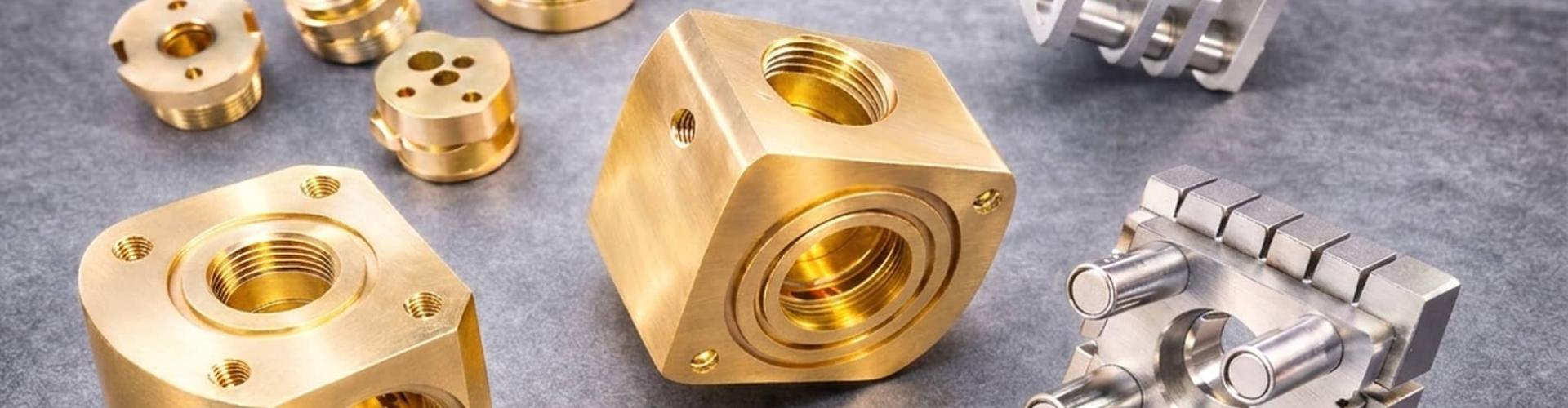
Capability to perform electroless nickel coatings to a wide range of metals, ensuring adhesion, durability, and optimal performance depending on the base material.
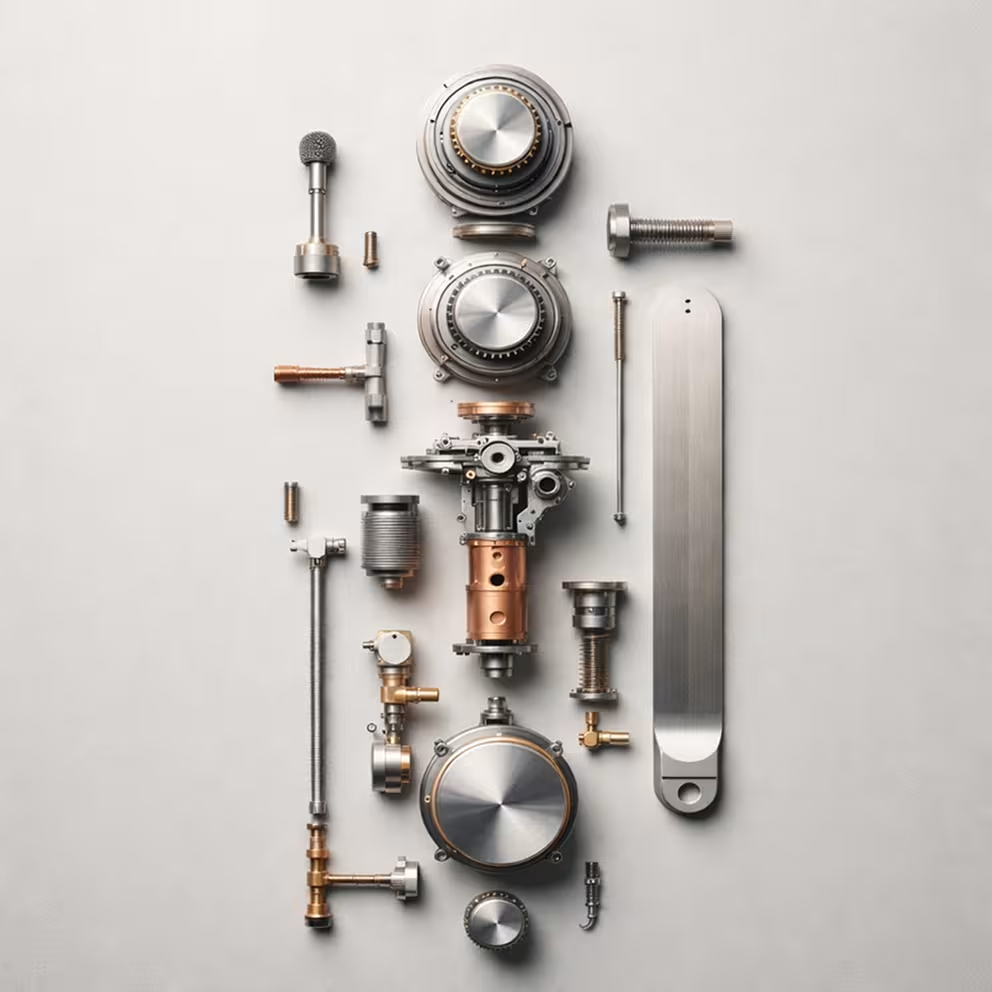
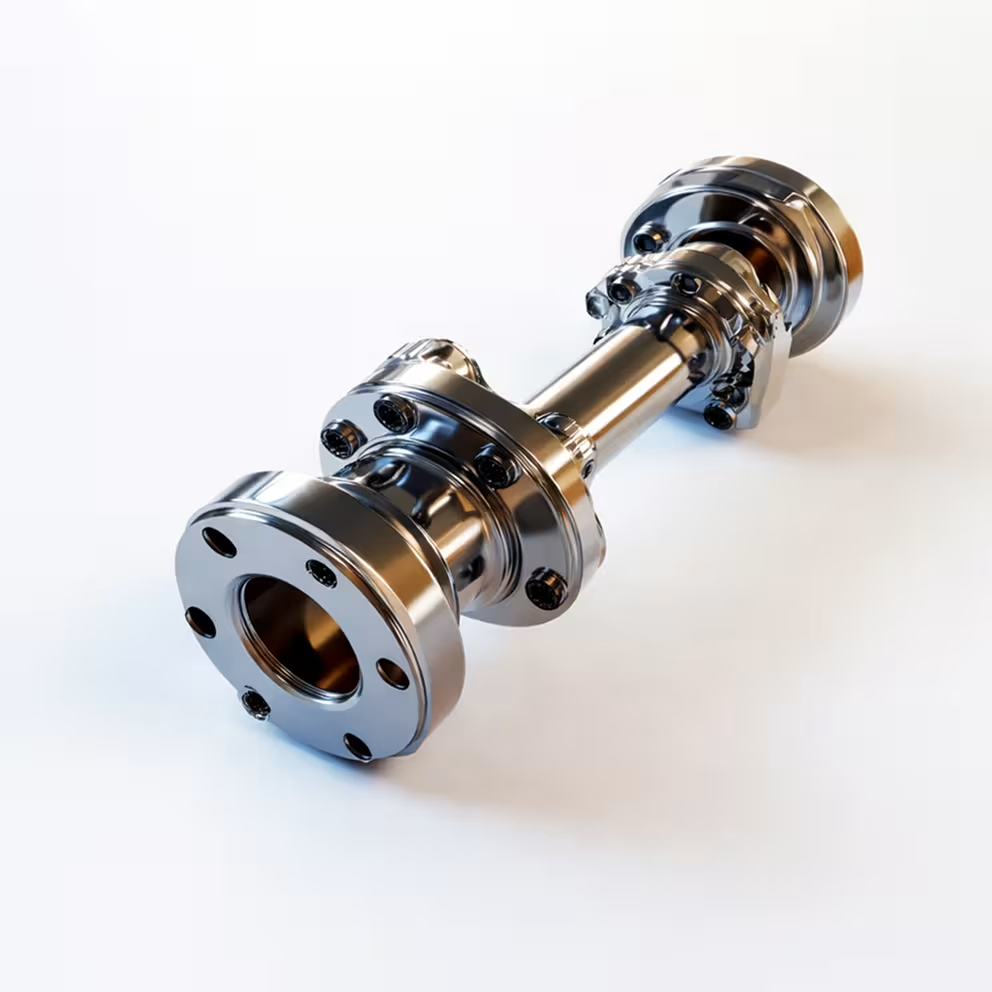
We rely on deep expertise in mechanics and chemistry to process parts that other coating technologies are unable to handle.
Coatings portfolio
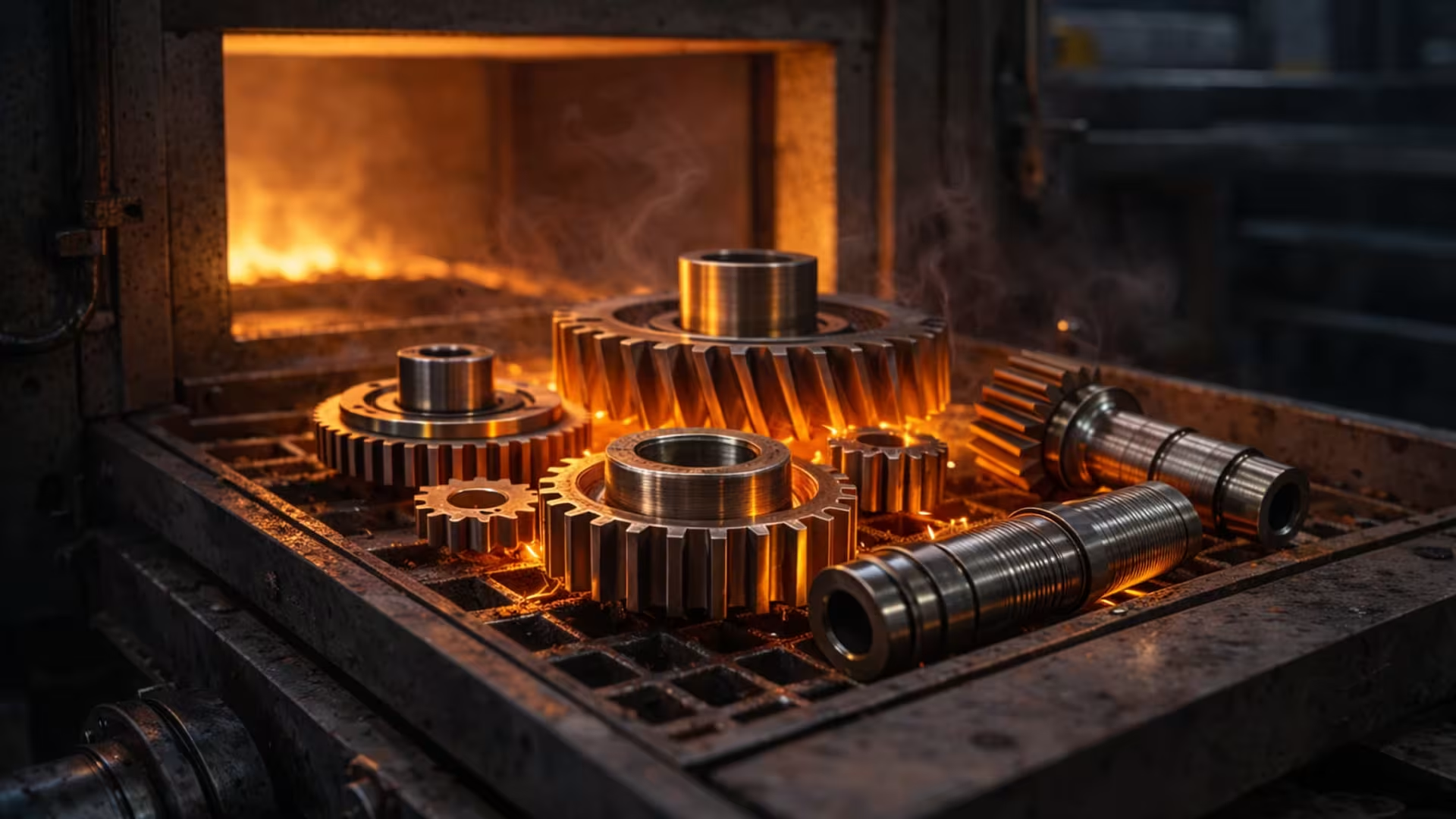
Heat treatment prior to electroless nickel plating. It reduces or avoids the internal stresses of the base material generated during processes such as machining, polishing, rolling, hardening, or cold forming. This reduces brittleness and improves the mechanical properties of the component, providing a more stable substrate with better receptivity to the coating.
The treatment is recommended for parts with an ultimate tensile strength equal to or greater than 1000 MPa. The treatment class may be specified by the customer or defined in accordance with ISO 9587.
Heat treatment that enables the release of atomic hydrogen diffused within the metallic structure, reducing brittleness and preventing failures. It is applied to steel parts with an ultimate tensile strength equal to or greater than 1000 MPa, as well as to surface-hardened components.
It must be carried out immediately after plating, preferably within 1 hour and no later than 3 hours, in accordance with ISO 9588 or as specified by the customer.
Post-treatment carried out after coating. The main objective is to enhance the integration and bonding between the coating and the base material, increasing adhesion strength and reducing internal stresses.
Heat treatment that hardens the coating to improve its wear resistance. The application requirements of the component determine the process time and temperature specifications.
It is possible to increase the coating hardness from 700–800 HV up to 1100 HV.
Process that solidifies the Teflon layer on a surface, transforming the polymer into a solid plastic layer adhered to the substrate. Heat converts the dispersed Teflon particles into a continuous film, ensuring that the non-stick and low-friction properties are uniformly maintained across the entire treated surface.
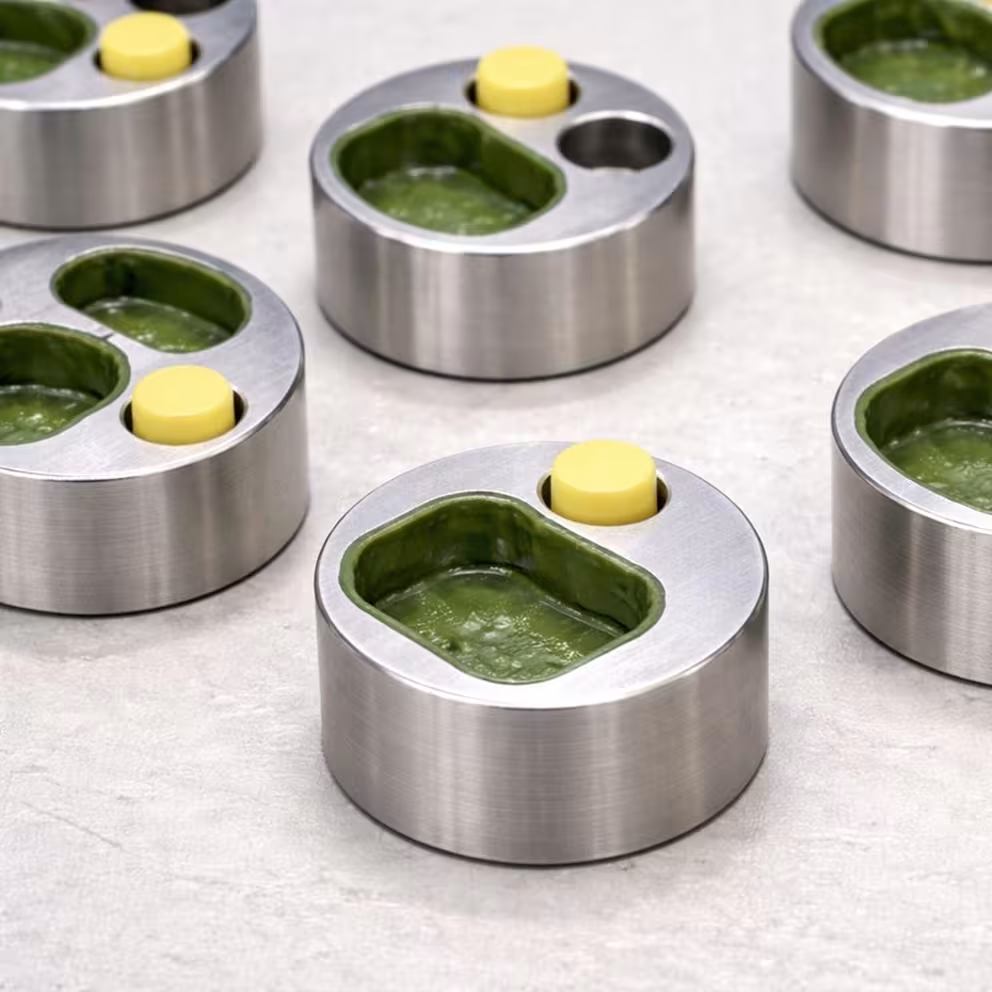
Applied to keep specific areas free of coating, enabling subsequent processes such as welding, electrical contacts, or other specific uses.
Each project starts with a technical analysis that integrates mechanical engineering, chemical engineering, and optimized logistics to meet the specific requirements of each part, each customer, and each industrial sector.